Showing posts with label Religious Abuse. Show all posts

Friday, January 14, 2022

SO LONG, AND THANKS FOR ALL THE TRAUMA

This holiday season has been the best my wife and I have had in years. Possibly ever. And I'm saying this having recently recovered from COVID-19. Why has this been a banner year for us? There are over 400 miles between us and our closest Mormon relatives, and I have silenced all my social media apps. 

You see, we recently moved out of Utah. It was a long time coming. I quite literally should have done it 15 years ago (I didn't have the money or means to move initially and found various lukewarm reasons to stick around, like a couple bands or a dead-end career). But after several months of hard work and planning, we finally got the hell out of Dodge. 

Sure, our new home is in a warmer area with less snow and smog. But I have long suspected that my depression this time of year is not caused by the season, but rather I simply loath and dread having to weather the holidays amid a sea of insufferable Mormons. Now I have confirmation. 

It has been a few months since I last drove past a Mormon temple, or a billboard for color coded scriptures for children, or been held captive by a Mormon supervisor at work in a conversation about how awesome it is that their wife is cool with them drinking Kava with their poly friends. Or heard casual homophobia, racism, sexism. Or a comment from an executive director about how we should all be praying before a storm. Or heard someone say that Mitt Romney should quit his job as a senator for Utah because he voted to impeach Donald Drumpf for obstruction of justice and is therefore a traitor to the GOP and the US of A. Or heard a co-worker argue with a mental health patient about the existence of god which is totally apparent because he always answers prayers with "yes, no or wait." Or heard a family member say that President Obama and Hillary Clinton are depraved and awful people while Donald Drumpf is a godly and decent man who just wants to help heal this nation--after all, he did set aside his fortune and live in the humble White House. I no longer have to read conspiracies in a group text about Omicron being a covert way to inoculate the population against COVID-19 without the use of vaccines--which the government will never admit to! I'm not surrounded by conservative science deniers who don't understand the first thing about vaccines, masks or public health. I no longer cross paths on a weekly basis with 18 year old missionaries who are accustomed to having everyone greet them cheerfully and offer them food. I am no longer inundated by people who fetishize parenthood and ask intrusive questions (mostly to my wife) about why we don't have at least 5 kids. People don't look at my wife's multiple ear piercings and tattoos in horror and righteous judgement. People don't view my big bushy beard as statement of counter culture. 

But above all else, we no longer have to be the bigger person at family gatherings by leaving politics and religion out of dinner talk despite no one else doing the same. We no longer have to hold our tongues in silence as everyone around us shits on our beliefs. We no longer have activities like movies and walks in the park ruined by inquiries about our status in the Mormon church. We no longer have to worry about offending people by our mere existence while eating ice cream. We can drink coffee in peace. We can swear and talk about R rated movies. We can have beer in the fridge and whiskey on display. 

Monday, February 3, 2020

GASLIGHT THE WORLD

Let's say there's a young woman who is in an abusive relationship with a man. Let's say he is verbally abusive towards her and controls her sexuality in part by holding sex as a bargaining chip. Additionally, if she doesn't comply with his manipulative behavior, he keeps her away from her family and friends. She knows this is unhealthy, but cannot find a way out of this relationship without potentially making matters worse. So, she cuts herself. Her abusive partner finds her bloody and delirious, and takes her to the hospital where healthcare professionals see the signs of depression and self-harm. A psychiatrist talks with her about the apparent abuse, and after several scheduled therapy sessions, recommends that the woman leave the abusive partner. They even get the police involved to make sure the man cannot hurt her further. She takes the life-line and walks away, finally able to start a better life.

As someone who works in treatment, I have seen this kind of scenario play out many times. Most of my experience has been separating children from abusive parents. This is typical for victims of abuse--separation from the abuser. It would be unthinkable, unethical, and possibly criminal for a mental healthcare professional to recommend that a victim stay in the abusive relationship. Right?

I have worked in a number of treatment facilities over the past decade or so. I can't say any of them handle religion in a manner which doesn't cause problems. Utah County is chalk full of Mormons, who believe that they have the one true gospel and only they can save humanity from themselves/Satan/god. The stated policy for every treatment facility I have worked for has been that employees should not proselytize religion to their patients. And yet, I have seen countless instances of Mormons breaking that boundary. Overtly, and unapologetically.

At any rate, I actually agree with the policy. I think it's a good rule of thumb for healthcare professionals to avoid pushing religion (and atheism!), politics, pseudo-science, etc. on the vulnerable people in their care. But some facilities take it a little further. Not only do they discourage proselytizing of patients, they also recommend that patients do not make any changes in their religious views while in treatment.

On the surface, I can see this being a good rule of thumb as well. But I have seen a number of patients who have been hurt by religion or who simply don't want to follow the religion of their parents, and the facility where I currently work encourages them to stick with it. I have seen therapists even refuse to talk to their patients about their thoughts on religion and how it affects their relationship with their parents. Even just encouraging the patient to set a boundary with their parents would have helped smooth out certain situations. But no, that would upset the parents and we can't do that, because the parents are the ones who pay the bill, and let's be honest, the parents are the real customers here, not the patient who is depressed because his parents are controlling every aspect of his young adult life. No, no, religious views (of the parents) must be protected!

Part of the issue here may be due to the fact that Religious Trauma Syndrome is not yet recognized by the scientific community at large. At least, it isn't included in the DSM-V (the go-to diagnostic manual for psychiatrists). Religious trauma can fall under PTSD and similar diagnoses, but as is evident by the way many people avoid talking to patients about religion entirely, I think it would be helpful for it to be it's own category of trauma. It would provide a context for professionals to talk to patients about the very real emotional harm leaving religion can cause.

Imagine a person feeling controlled and manipulated through religion for their entire lives. The people they trust most use religion to coerce them to do or not do certain things. Imagine the religion tells the person not only can they not have sex, but that if they touch themselves sexually that they will be separated from their family for eternity. If it was an abusive parent or spouse, a therapist wouldn't think twice about helping the victim out of that relationship. But religion gets a pass. Religion is presumed to be a net good and way too big a can of worms to open. I have heard Mormons tell suicidal LGBT people that staying with the Mormon church is good for them and necessary for them to be happy. All they have to do is either marry someone they are not attracted to or remain celibate for their entire lives. After all, their family is at stake. Why would they risk losing their family for eternity? Do they want to make their mother cry forever?

To be clear, I'm not advocating that therapists push atheism on a patient. That would be just as unethical as pushing religion. But I am advocating therapists being willing to walk a patient through their own beliefs and encouraging them to stay true to their values rather than the values imposed upon them by parents.

Like many people, I found peace of mind and came out of depression by leaving religion at the curb. Staying in religion would have prolonged my depression. Thank god I'm now an atheist.


BONUS MATERIAL:


Dr. Darrel Ray on religion and sexuality:


Monday, December 2, 2019

S.A.D.

I don't particularly like the holiday season. I want to, but I don't. Some might think I suffer from Seasonal Affective Disorder (or S.A.D.). And while the timing seems to fit, I don't think it adequately describes my experience during the winter months.

First and foremost, I'm not really depressed. Sure the weather sucks, and I would rather it be too warm than snowy. But I can manage the cold, honestly. No, it is not depression that fills me, but anger. The holidays make me angry. I guess you could say I suffer from Seasonal Anger Disorder (too on the nose?).

So, why am I so angry when so many people around me are oozing joy and cheer? Why does the jingling of bells and conspicuous displays of trees decked-out with glistening, eye-catching trinkets get under my chilled skin? Religion. Of course it's religion. Religious people take their favorite holiday and spread it out over two seasons (yes, I'm looking at you, Costco). To them the "most wonderful time of the year" translates to about 5 months of overt proselyting. And when people push back and seek inclusion by saying something as innocuous as "Happy Holidays," Christians throw a hissy-fit about an alleged War on Christmas and a decline in American values, as if their religious traditions are synonymous with morality. 

I don't have anything against people being open about their beliefs and even arguing about them with others. I have done it plenty. But the holiday season gives Christians of all stripes a social license to be more brazen about it and they get offended by others doing the same. It isn't a level playing field. 

Some who have followed this blog or my other social media platforms might think that I am confrontational about religion and actively look for arguments with believers. While it is true that I have found myself in some pretty public arguments online and in person, I don't generally look for those opportunities, and I have even shut down many such conversations when I either didn't feel it was appropriate in the setting (mixed company, usually with children), or I simply wasn't feeling up for it. To be honest, I can't remember the last time I actually got into a religious argument with someone. It's probably been a couple years. 

I guess I'm just tired of the conversation. It is always with the same people (family members mostly) and I know it isn't a fruitful conversation to have most of the time. They are too defensive (they literally can't even entertain the idea that their religion might not be true) and my standards for evidence are too high for them to convince me (as if that's a bad thing). We are at a stand-still. Until something changes, I don't see the point.

Despite my reluctance to engage with believers, they routinely seek me out. Just in the past month I have been coerced through social pressure into participating in religious rituals (family members create situations where it would be perceived as rude if I refused), had the Mormon missionaries knock on my door and try to convince me to give them 10% of my income or suffer eternal consequences (when I told them I wasn't interested, they told me they would put me on a "do not contact" list if I gave them my name, which having been a missionary once myself I can tell you is not necessary), and an ultra conservative uncle of mine used the family contact list of all my extended family on my mother's side to send out a newsletter for his conspiracy-riddled Trump propaganda website. And I still have to make it through Christmas.

So, don't tell me "You can leave the church, but you can't leave it alone." I have been actively avoiding arguments with religious people for months (at least) and they keep badgering me. It seems they can't leave me alone. I would love to just let Mormonism be that silly little religious group I was a part of in my youth and move on to more important things, but they won't let me. They literally bring it to my house; they coerce me at family get-togethers; they advertise on freeway billboards and YouTube commercials; they make presumptuous jokes during staff meetings at work. Not a single goddamn day goes by that I am not reminded of the abusive, manipulative zealots that stunted my adolescence and young adulthood. And the holiday season just puts a bell and multicolored lights on it. So, please forgive me if I appear a little grumpy when I hear Bing Crosby in the grocery store telling me how wonderful it is that god sent his son to earth to be murdered because he--the all powerful, all knowing creator of everything--can't forgive his mortal children for touching their junk and drinking coffee without some good old fashioned blood-infused, death cult magic (it should be noted that as a child I was not allowed to watch the movie "Willow" because a sorceress tries to kill a baby so she can use its blood in a magic spell). 

You can leave the church, but the church won't leave you alone.


BONUS MATERIAL:


Christopher Hitchens on Mormon missionaries, among other things:


Christopher Hitchens on the death cult of Christianity:

Monday, November 18, 2019

STRAIGHT OUTTA DODGE


When the creators of South Park, Matt Stone and Trey Parker, dove headfirst into the Mormon pool by producing the satirical hit Broadway play "The Book of Mormon" they received a lot of criticism and adulation from all sides of the religious debate. The Mormon church actually bought ads in the program inviting patrons to read the book after watching the play. The church was betting that many who saw the play would think, "Wow, that's so cool that they are good sports about all this. Maybe I'll check it out." When the more self-righteous mainstream Christians clamored about Mormons not being real Christians and that the play normalized a cult, Matt and Trey came to the defense of Mormons saying something like, "Yeah, Mormons are weird, but they aren't any weirder than the rest of you Christians. At least when we run into Mormons they are super nice and happy all the time."

I get it. Mormons seem quaint and quirky to outsiders. A lot of people view Mormons in the same way they do the Amish: a little backwards, but ultimately harmless. And sure, maybe they aren't as subversive and nasty as some religious zealots can be. But that's how they get ya.

You see, for a Mormon, there is an ulterior motive to their overt pleasantness. They are literally selling you something. For the low, low price of 10% of your income, you, too, can achieve eternal life. Act now and they will even allow you see your family in heaven.

Their greatest marketing tool is their kindness. By being nice to you, the customer, they hope that you will be impressed by their graciousness and want to join their church. It is not unlike Coke-a-Cola spending millions to advertise their charitable givings during the Superbowl. And Mormons are not subtle about it either. They literally talk about it as a way to encourage non-Mormon friends and family to talk to the missionaries and get baptized whenever they have Sunday school lessons about how every member is a missionary. In fact, as an actual missionary one is required to do weekly public service so that locals will see the church in a favorable way.

In my mission we offered free English classes at the church for anyone who wanted to attend. I remember one time we were starting a new round of classes and we pushed extra hard to have a great turnout. We printed new eye-catching posters and plastered the city with hundreds of ads. It took us a week or two to post them all. When the class started we had our highest attendance ever. Dozens of people filed into the entry level class, most of whom I had never seen before. We were ecstatic. Another missionary and I were teaching together, and I started the class by explaining who we were, and what the class would be about. Suddenly, I felt "impressed by the spirit" to bare my testimony that the church was true and the Book of Mormon was a real historical document and all the other typical sound bites Mormons use during a sales pitch. Part way through my testimony, which was starting to drag and feel a bit forced (as they often do), the other missionary interjected and started writing basic words on the white board. He turned to me and whispered, "You gotta include more English, man." I was deflated. I really felt like god wanted me to say what I said, and that I would touch the heart of someone in our captive audience. After all, we were missionaries in post-communist Bulgaria. Business was slow and we were desperate for success.

The next week maybe 25% of the students came back. The week after we were back to our regular crew of about half a dozen people for all three classes.

Sometimes I think about that incident and regret sharing my testimony. Maybe I could have done some actual, no kidding good for the local people who obviously had a desire to learn English (learning English meant having a better chance of winning the Green Card lottery and moving to the USA). Maybe then my two-year mission wouldn't have been a complete waste of time. Other times I think it was a good thing that I put off so many people on the first day of class. At least that way they were able to see our true intentions--and let's be clear, converting them to Mormonism was our intention--and get out while they could.

Maybe it's a wash.

Fast forward to this past weekend when my wife and I went to her parents' home for dinner. We had a pleasant evening. There was good food, we played a board game, my dog got to spend some quality time with her third favorite person in the world. As the night was wrapping up, I thought to myself, "wow, this was actually a nice little get-together." When it was time for us to leave, my wife announced that we needed to get going, and without hesitation my father-in-law said, "Let's have a family prayer." It wasn't a question.

I was livid. I reluctantly stood by as my in-laws and my wife all kneeled on the floor and my father-in-law said a prayer about, well, I don't know, I was too upset to pay attention. The whole evening was a sham. It was coercive, passive-aggressive manipulation. He was betting that we wouldn't want to be rude after such a pleasant evening and would just go along with it. Then god would "do the rest" and soften our hearts and we would leap back into the Mormon pool once again.

Was is a big deal? Could I have gone along with it? Sure. I have in similar situations. But my wife and I have had conversations with her parents about Mormonism and our relationship with the church (we have both removed our names from the church's records). They don't know all the details, because my wife isn't all that eager to get in to it with her parents. And that's fine. She gets to dictate the pace with her family. But her parents know enough about our position to be able to reasonably infer that at the very least things like prayers and firesides and sacrament meetings and General Conference and reading scriptures is touchy for us and very likely to make us uncomfortable. Especially when put on the spot in front of other family members who may not know as much about the situation. What if our roles had been reversed? What if I made it a point to have a movie playing which I knew would offend my guests as they come in? What if I had steered the conversation to things like the health benefits of coffee and tea, or the moral case for abortion. What if before they left my home I insisted that I read a passage from Christopher Hitchens' book god is Not Great: How Religion Poisons Everything? At the very least I would be a poor host. But when religious people pull that nonsense knowingly in mixed company, they presumably get a pass. Frankly, it's rude and shows a lack of respect for our beliefs and boundaries. But Mormons don't care. The ends justify the means. In their view they are doing us a favor. They are offering us eternal life, after all, for the low, low price of 10% of our income. And if we act now we can spend eternity with pushy, self-righteous assholes.

I really need to get out of Utah...


BONUS MATERIAL:


Christopher Hitchens on how religion poisons everything.

CRAZY FOR JESUS

Note: I found this saved as a draft from last February. I never finished it and I don't really remember where I was going towards the end. I gave it a kinda sorta conclusion so that it didn't just end. Mostly I'm publishing this because I was going to write a similar kind of post about another recent occurrence of Mormons mormoning all over the place. I'm sensing a pattern...


I work in mental health treatment and the facility where I work has specific guidelines concerning the way in which staff should talk about certain topics with patients, the long and short of which is staff should generally avoid controversial topics, especially religion and politics. Living in Utah County, where everyone assumes locals are Mormon and "every member is a missionary," this is easier said than done since many people feel a strong desire to save souls from damnation and, after all, Mormonism is totally 100% true, so obviously it can't be a bad thing to use one's influence over vulnerable and impressionable patients in one's care to bring them to the truth which will totally change their life for the better.

You get the idea.

One would think that Mormons, of all faiths, would be able to respect this therapeutic boundary since they believe that those who don't join the church in this life will have an opportunity to do so in the afterlife. This, in turn, raises the question of what the deal is with those tens of thousands (notably not hundreds of thousands, Mr. Holland) of young pre-adult missionaries whose sole purpose is to convince other people that their worldview is fundamentally wrong and they should join the Mormons instead. What could possibly be the purpose of missionary work if the afterlife will surely tie off any mortal loose ends? (Tithing. The answer is tithing.)

The other day a few co-workers and I were chit-chatting between meetings. Apparently some Mormon co-workers not in the room have been bad in this regard. Very bad, indeed. Even after a superior lectured them and told them to stop trying to convert the patients to Mormonism, they kept doing it. And now they got one, because of course they did. Some time in the next couple weeks a mentally compromised and impressionable patient will be baptized into the Mormon church in part because they want to make their Mormon mentors happy. And because this is Utah County, other than a second slightly firmer talking-to, there will be no corrective action for the staff who broke this very important legal boundary (the fact that the staff broke this boundary could open up the institution to a law suit, although it's unlikely).

One person present in our conversation was very vocal in his opposition to proselytizing patients in our care. So much so that I thought I might have found a secular ally. That is, until he went on to clarify his position that although he would never talk to a patient about his personal religious beliefs, he really likes the fact that part of the treatment program at our facility emphasizes the importance of having a Higher Power and how it invariably helps in therapeutic treatment.

I was taken aback by this comment for a few reasons. First, I had completely forgotten that this was part of the program as I have literally never heard anyone--staff, therapist, nurse, psychiatrist--mention a Higher Power as part of the program in the two years I have work for this company. During training meetings prior to starting the job, I didn't make too much of it at the time because, again, this is Utah County and that kind of thing is pervasive within the professional community.

The second reason this mention of a Higher Power struck me was the apparent contrast, no, contradiction it has with the boundary staff are expected to hold regarding discussing religion with patients. I had never realized this before, probably because I had never been presented the two conflicting ideas so close together.

How can a treatment facility simultaneously promote the notion of a Higher Power as an integral part of its program and discourage staff talking about religion with patients? As my co-worker explained, it is because "a Higher Power can be anything."

Well, how is that not just offensive to everyone involved? Believers, non-believers, deists, Buddhists, everyone should find the idea that "a Higher Power can be anything" utter nonsense which belittles all worldviews. Allow me to explain.

For a non-believer (this would include Buddhists and other eastern philosophies which do not necessarily promote a god or deity which would intervene in our affairs) the notion that a belief in a Higher Power is necessary to be successful in treatment is offensive because it implies that since they do not believe they will not be successful. In addition to being offensive, this can be very damaging to the patient, and I have seen this first hand. Furthermore, the notion of a Higher Power in a therapeutic sense originates from Alcoholics Anonymous, which started out as Christian support group during the Prohibition which sought to bring vulnerable and dysfunctional drunks to Jesus. It is inherently religious. Only in recent years has AA and its affiliate organization NA (Narcotics Anonymous) softened the religious verbiage in order to reach a broader base. But the supernatural roots are still there. It should also be noted that the success rate of AA and NA is no better than other secular support groups, because what is really important in treatment and sobriety is social support.

For a believer in a specific, monotheistic god, like a Mormon, say, the fact that a Higher Power can be anything (i.e. a rock, a bag of chips, Donald Trump's dentures, etc.) suggests that the supposed benefits of believing are literally in one's head. What could be more offensive to a believer than to imply that god is psychosomatic, tantamount to a delusion?

For a deist, a Higher Power which would intervene and help a person with mental health issues runs contrary to the central tenet of deism which is that whatever Prime Mover started the Big Bang has left the universe to its own devices. Divine intervention is incompatible with deism generally. Even the softer notion of a Higher Power which would not intervene directly but would simply be disappointed if a person relapsed runs contrary to the core of deism. A deistic Prime Mover simply would not care about a person's treatment.

I could probably keep going, but you get the idea. What I'm driving at, despite my meanderings, is that I'm just tired of Mormonism. I left the church over a decade ago and I'm frankly exhausted. I guess it's true what they say, "You can leave the church, but the church can't leave you alone," or whatever...

Friday, August 24, 2018

HIGH-MINDED HIVE MIND

There has been a long-winded debate among Mormons and ExMormons about the Church's influence over politics. I first came across this argument when GOP primary winner, and man whose political career died trying, Mitt Romney ran for US president in 2012. The question came up of whether or not the Church might try to influence Mitt's policies as president or outright tell him what to do. A similar concern arose of JFK in relation to the Vatican. At the time, Mitt assured voters that he would represent his constituents and not be bullied into submission by a church which has had a sordid political history.

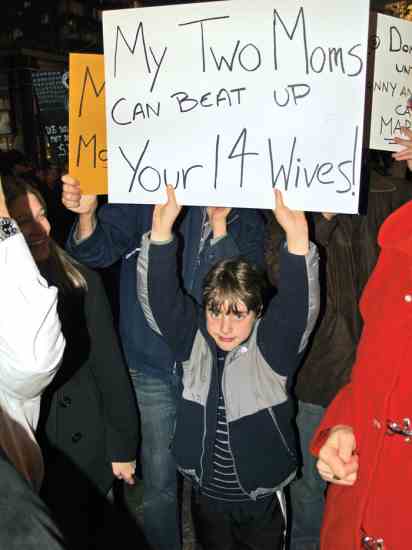
In the past the Mormon Church has sought to influence politics in very direct ways. As early as their first settlements in the American frontier, Mormon founder, and man who repeatedly takes your 14 year old daughter behind the barn to "just talk about God and stuff," Joseph Smith had gathered thousands of followers in Ohio, Illinois, and Missouri. These small communities which relied almost entirely on local government were soon overrun by apocalyptic "Latter-day Saints" with a single religious mind who all voted according to their prophet's conscience (a prophet who was convicted of fraud in his youth for convincing other men to dig for buried treasure by staring at a magic stone in a hat, and who later started a religion based on an ancient gold book he found in the dirt which he "translated" by using a magic stone in a hat, and wouldn't let anyone with a background in linguistics touch it).

It is no wonder, then, that the locals responded with violence to oust their hive-minded new neighbors (who also happened to be stealing their wives and daughters as polygamous sister-wives, which is also why the Church was so in favor of a woman's right to vote since it would effectively give Mormon polygamous households several more votes).

The Church has learned over the years to be more subtle in their political influence. But as we have seen over the past few decades, the Church still can't keep its greasy fingers off of certain issues. We still don't know the full extent to which the Church has actively sought to thwart the gay rights movement in Hawaii and California. In Hawaii they kept to the shadows when gay marriage was proposed, but became much more brazen when the issue came up as Prop 8 in California, issuing an official statement from the Church to be read over the pulpits asking members to donate their time and as much money as they could to fight this societal evil. And many people took the Church seriously, sacrificing their children's college education to help fund the anti-gay marriage agenda (the Church teaches that members will face a choice like Abraham sacrificing his son Issac as a show of good faith to God, and people look for such sacrifices in their lives believing God is testing their faith).

For years the Church has denied any wrong doing regarding Prop 8 (among other things), and claims that most of their donations, like their humanitarian efforts, came in the form of faithful members volunteering their time. Maybe this is true, but many sources (such as the documentary "8: A Mormon Proposition") have shown that the Church has donated a metric butt-load of money as well.

More recently the church has sought to influence politics in Utah, where they have the strongest foothold. Around the time the US Supreme Court legalized gay marriage (2015), the Church successfully got the Utah legislature to incorporate protections for "religious liberty" in a bill which offered housing and employment protections for LGBT people. In other words, the Church successfully pleaded for the right to discriminate against gay people.

They have also successfully changed votes in the state senate regarding other issues, such as medical marijuana, liquor laws and comprehensive sex education. And despite their long history of breaching the bounds of tax exemption, officially the Church has maintained that they DO NOT tell their members how to vote (see video below).

Next they'll be telling me the Church no longer practices polygamy.

Well, in recent news--yesterday, in fact--the Church sent out a mass email to members in the state of Utah asking ever so politely that they vote "NO" on a bill which would legalize medical marijuana (see left).

It seems that no one told self-proclaimed prophet of God, and nonagenarian who's pretty sure today is a weekday, Russell Nelson that there are some things a prophet just can't do (should we tell him God is supposed to be omniscient?). I guess this is what happens when you send a self-righteous heart surgeon to do an attorney's job.

And, of course, the IRS will do nothing regarding the Church's tax exempt status. The best we can hope for is that enough ExMormons petition the Freedom From Religion Foundation to sue the Church.

The thing I don't understand is why the Church gets involved at all. They have a long list of prohibitions for their members which include many legal things, such as tobacco and alcohol, coffee and tea, premarital sex, watching R rated movies, dating before the age of 16, wearing revealing clothes, swearing, shopping on Sundays, etc. Yet, when issues come up in American politics (notably, not the rest of the world), the Church shoves itself into the conversation where less than 2% of the population (at best!) adheres to their worldview. Why not stay out of it and if it becomes legal, like gay marriage and alcohol and everything else, just issue yet-another prohibition for members. This is how the system is supposed to work.

Sigh...


BONUS MATERIAL:


Former Mormon prophet, and nice young man just trying to pay for college by selling magazine subscriptions, Gordon Hinckley reassuring the public that the Mormon Church does not tell members how to vote.


Tuesday, June 19, 2018

MODERATE INTELLIGENCE

I recently had the unexpected pleasure of discussing Sam Harris (author of The End of Faith) with a Mormon. By "unexpected pleasure" I mean that although this individual disagrees with Sam Harris on several points, he was still open to the conversation and willing to consider other points of view. Two points of contention this person has with Sam Harris are his anti-theistic views of religion generally (which I totally understand from a believing Mormon's perspective) and Sam's seemingly disparaging views of Islam specifically.

On the first point, I recommended this person look up Christopher Hitchens and reconsider whether Sam Harris really is that hostile towards religion in comparison.

On the second point, well, it gets more complicated. On the one hand, I think that Sam Harris has some valid and pointed criticisms of Islam and has made a career speaking publicly about the potential, and in some cases demonstrable, harm which the religion's scriptures and preachments can produce.

For instance, the infamous 9/11 hijacking was committed by the truest of believers, as was the murder of Danish cartoonists and filmmakers, the fatwa on the head of Salman Rushdie for the crime of writing a fictional book, the fatwa on Ayaan Hirsi Ali for leaving the religion and speaking out against chopping off the clitoris of baby girls, the countless and ongoing atrocities committed by ISIS against homosexuals and infidels, the murderous riots which stemmed from an inflammatory video daring to depict the Prophet Muhammad (one of which resulted in the Benghazi kerfuffle), and many other instances of faithful Muslims who take their religion and its texts literally.

The trouble with Sam's view, or rather the perception of Sam's view which I would argue he hasn't done enough to correct, is that these many examples of extremism are not representative of the religion as a whole, in much the same way that not all Christians are responsible for the Crusades, the Spanish Inquisition, the Ku Klux Klan, the Holocaust, bombings of abortion clinics or the murder of abortion doctors. To confound the matter, many misunderstand Sam Harris' criticisms of the beliefs and tenets of Islam as bigotry against Muslim people (see video below).

In a way, and I am hardly the first to make this point, the Muslim world is currently undergoing a series of growing pains similar to Christianity during the Dark Ages. Hopefully more moderate Muslims will win out, as with Christians, but only time will tell. And I think this is Sam's overall point in criticizing Islam. It's not that Islam necessarily results in terrorism. But rather that it's teachings can be interpreted in such a way that terrorism is a result. A Christian example would be how Hitler exploited traditional Christian beliefs and prejudices about the Jews being responsible for the death of Jesus to build his Nazi army.

Likewise, the Bible supports some terrible things as well, such as the subjugation of women, the genocide of various middle eastern tribes, the stoning of homosexuals, apostates, disobedient children, those who work on the Sabbath, those who eat shellfish and those who wear mixed fabrics. If any Christian or Jewish sect followed the Bible literally and enforced these rules--which believers often defend as morally necessary for the time and people of the Bible--we in civilized society would have a moral obligation to stamp it out. Fortunately, however, most Christians and Jews don't take their holy books that seriously.

So when Sam Harris calls Islam "the mother load of bad ideas" understand that he means this in a context in which Muslims take their religion seriously and literally, and that the only real criticism a moderate believer can level against a scriptural literalist is a lack of nuance which all too often is based on an irreconcilable cognitive dissonance in the mind of the moderate. In other words, the reason a moderate is not a literalist is often because taking scripture literally--like when the Bible tells you what is an acceptable consequence for a disobedient slave--conflicts with a person's inner morality. Both are arguing from a position of faith and a presumption of scriptural authority, rather than reason and evidence. Therefore, how can one side claim the other is wrong in any absolute sense?

It seems to me that the best way for Muslims and Christians and Jews to assimilate into a cooperative multicultural society may well be for the growing moderates to cherry pick their respective religious texts and disregard the unpleasant bits. We may in fact depend on this apparent hypocrisy. The trouble seems to come from believing in the inerrancy of scripture. As much as I would like to see religion become a thing of the past, I must admit that a world of self-serving cherry-picking moderates is preferable to a world of valiant idealistic literalists.

And in an effort for transparency, I have been guilty of making sweeping generalizations about Muslims in the past of the sort Sam Harris is often accused, and have even written posts on this blog which today make me cringe. I have considered taking the posts down, but I feel they are an important part of my journey away from religion, as painful as they may be to me now.


BONUS MATERIAL:


Sam Harris calling Islam "the mother load of bad ideas" and Ben Affleck losing his mind:


Monday, June 18, 2018

MULTI-LEVEL MORMONING

Outside of every Mormon church building is a sign which states "Visitors Welcome." Only a couple of times in my years as a Mormon have I ever seen anyone take up this offer. Each time the visitors were swarmed by smiling faces eager to set up a meeting with the local missionaries so that the visitors could promptly be baptized (why else would god "inspire" them to walk through the door?). Never have I seen this tactic of flurried interest result in a new Mormon.

Most Mormons seem to have no idea why anyone outside of the church would have no interest in their religion. Mormons believe they have found the one true church with exclusive rights to truth and lasting happiness in this life and the next. Think of it like a pyramid scheme or Multi-Level Marketing company, which happen to do quite well in Utah (after all, why would your bishop's wife lie?). A person who buys into the rhetoric and truly believes the claims that their product has legitimate value and can improve everyone's life will have a similarly difficult time understanding why some people, such as myself, don't care how essential oils helped cure you of your chronic halitosis.

The MLM concept that each employee is a "CEO" of their own business is not unlike the Mormon concept that "every member is a missionary." Furthermore, just as MLM's require their "CEO's" to buy large quantities of product, the Mormon church holds individual member's salvation and eternal families at ransom for 10% of gross (can you really put a price tag on eternal happiness?).

Some Mormons, however, are less credulous. Well, in certain regards, anyway. For instance, once while engaged in an argument on social media wherein I called out the blatant homophobic policies of the Mormon church (shortly after the church announced that homosexuals are apostates and that children of homosexuals in a loving consensual gay marriage could not join the church without reaching the age of eighteen and publicly denouncing the sinful lifestyle of their homosexual parents), a believing Mormon plainly stated that they could not understand why any homosexual would actually choose to be a member of the church. To which I responded: "The Mormon church has made it clear that it is not a welcome place for homosexuals, and it is up to members to decide whether or not that is a good thing." Not long after my comment, this person unfriended me.

In a less dramatic conversation, a family member told me they couldn't understand why someone who wasn't a member of the church would willingly live in Provo, Utah (where BYU is located). At the time I didn't respond, in part due to the fact that this person had no idea that their comment applied to myself. But I think it is quite telling that even believing Mormons recognize that their religion isn't very tolerant or welcoming of outsiders (I can only imagine what it must have been like in Missouri 150 years ago...), which makes their missionary efforts and welcome signs outside their assembly halls seem unnecessary and ironic.

What does it say about Mormonsim if the one place in the world where their church has true power and influence--Provo, Utah--makes non-Mormons feel oppressed or unwelcome? What does it say about a church which claims to be "family centric" if a large minority of the population (up to 10%) and their families are excluded from "the one true church" simply because of who they are? What does it say about the church's leadership when believing members of their church bring attention to the injustices and harm caused by the church's policies and the leaders respond by excommunicating the whistle blowers?

You can tell a lot about an ideology by the way they treat heretics and apostates.

Friday, June 15, 2018

BABY STEPPED IN BULLCRAP

Every so often I hear believers swoon over some religious leader who said something that wasn't completely terrible. Congratulations to them for managing to scrounge up at least a modicum of human decency. Can I stop holding my breath now?

Perhaps these baby steps are a good sign. But don't expect me to ignore their long history of abuses for which they have yet to atone.

Probably the most blatant example of this two-faced ingratiation is Pope Francis. On the one hand, he pays the most swell-sounding lip service to progressive Catholics on topics like, say, gay rights. But on the other hand, if you know anything about actual Catholic doctrine, you can hardly say that the Pope is a friend of the LGBT community. Case in point: a few weeks ago social media was all a flutter over an anecdote of a gay man who had a one-on-one conversation with Francis, wherein the self-proclaimed infallible Holy See said of the man's homosexuality and abuse he suffered at the hands of a Catholic priest, "You know Juan Carlos, that does not matter. God made you like this. God loves you like this. The Pope loves you like this and you should love yourself and not worry about what people say."

So there you have it. The Pope, and by extension the Catholic church as a whole, is now totally squared on the LGBT issue. Except that he isn't. If he was actually interested in righting wrongs against LGBT people he would actually change church policy to be more inclusive--which is something that the Pope could do! But he doesn't seem interested in that. Which means that he isn't really interested in making amends or ending abuse.

Some people have argued that Pope Francis is laying the ground work for more impactful change in future generations. Bullcrap. Did Moses lay inter-generational ground work to prepare the Israelites for the Ten Commandments? No, he destroyed the golden calf and made them wander in the desert for forty years. Did Jesus ease the Pharisees into the higher law? No, he raided the money changers in the temple and called local church leadership a bunch of greedy hypocrites. Did Pope Benedict simply fulfill John Paul's end game by abandoning the atrocious centuries-old doctrine of Limbo? No! That's not how a top down theocracy works! God tells the Pope, the Pope tells the church, the church accepts it as dogma. And according to the church's dogma, once the Pope makes something official, anyone who disagrees--including politically motivated Cardinals--is in the wrong. That's how infallibility works.

This same principle applies to the Mormon church and their "prophet" as well. A handful of lower-tier leaders have made efforts to soften the church's stance on LGBT issues (while others have hardened it), and progressive Mormons sing their praises. But in terms of actually policy, there is no place for homosexuals in the church. At least none which the mental health community would call healthy. And the fact that this is just the latest example of the church being decades behind the times shows how very fallible their theocratic system is.

Every year Provo hosts a giant patriotic circle-jerk for the Fourth of July. The night before the big day they kick off the event with an informal parade where everyday folk drive cars and motorcycles up and down State Street making all kinds of noise for hundreds of cheering pedestrians lining the sidewalk. The next morning, along the same street and in much the same fashion, is a formal Freedom Festival parade. The evening is filled with fireworks and music and dancing at the Stadium of Fire, which  conveniently rakes in a boatload of money for Mormon-owned BYU.

Last year the Freedom Festival brought controversy to the event when it came to light that every single LGBT advocacy group which had petitioned for a float in the parade was denied. This year, the mayor signed a statement that the festival would not discriminate against any group on the basis of sexual orientation. And the very next day, the festival denied all of the same LGBT groups participation in the parade on the basis that they were not "patriotic." Which, of course, raises the question of how the festival can in turn allow a group of 150+ Mormon missionaries to march in the parade...

In response, several LGBT supporters began making plans for a protest during the parade, which is similarly allowed during the Salt Lake Pride Parade, only from the other direction (what's more patriotic than a protest?).

Well, in a rare display of public outcry--at least for Utah County--LGBT advocates seem to have won the day. The festival organizers have agreed to allow LGBT groups in the parade so long as they abide by certain patriotic stipulations, including wearing red, white and blue colored clothes and waving American flags, etc. Interestingly, for the first time, the Mormon missionary mob will not be participating in the parade, but will instead be volunteers helping run the festivities. My guess is that this is intended to allow missionaries to rub elbows with patrons more freely. Clever, I guess.

My favorite part of the whole debacle, and the most reassuring sign that Utah is capable of baby steps even if the Mormon church isn't, is that Utah County Commissioner Nathan Ivie threatened to pull taxpayer funding for the event ($113,000) if the organizers continued to discriminate against LGBT groups, and had this to say: "I also know bulls--- when I see it. I didn’t think somebody would be stupid enough to do what they did."

Perhaps Mr. Ivie is new to Utah...

Tuesday, June 5, 2018

LUKEWARM REASONING

One of the blackest marks on the Mormon church's sordid history has been its racist policies against people of color (see what I did there?). Until 1978 the church banned black men from holding the priesthood, which was tantamount to making them second-class members (not unlike women in the church today). This is fairly well known and is even referenced in the popular Broadway play "The Book of Mormon." But this was only one part of the policy.

A lesser known, but arguably much more impactful and sinister part of the policy, was that black men and women were not allowed entrance into Mormon temples. This meant that black people could not go through the endowment ceremony or get married in the temple, which Mormons believe are necessary rites to be allowed into the highest, most glorious parts of heaven. Effectively, black people could not go to the best version of the afterlife.

The argument which the church gave for this policy for well over a hundred years was that before the Earth was created, there was a war in heaven in which all people had to choose to support either Jesus or Satan. One third of these spirit children chose to support Satan and were cast out of heaven, and cursed to be demons on Earth to tempt humans into sinning. Eventually Satan and his minions will be cast to "Outer Darkness" which is basically annihilation. This will also be the fate of heretics and apostates who go through the temple ceremonies and then leave the church (there is some debate here among believers, so I may or may not qualify).

Another third of the spirit children chose to follow Jesus and made it to Earth in, let's say, preferential conditions. Specifically--and this is where the racism starts in Mormonism--these righteous and obedient spirits were granted white bodies and were thus allowed to go through the Mormon temples and earn their way to heaven.

The middle third of spirit children were somewhat on the fence about the whole thing. Eventually, they sided with Jesus, but were "lukewarm" in their resolve. As a result of their wishy washy passiveness in the pre-mortal life, they were "cursed" with the mark of Cain, which is a skin of blackness. This genetic line is said to have been preserved through the Great Flood through one of Noah's sons, Ham, who married a Canaanite woman.

Let me said it again, for over a hundred years Mormon church leaders taught that the reason black men couldn't hold the priesthood and black people couldn't go through the temple endowment and were therefore not allowed into heaven was because they were less valiant in the War in Heaven before they were born.

So, why bring this up? After all, it's been forty years since the church changed this policy and allowed black people full membership (well, for the men at least). What's the big deal?

Well, it turns out that the church is celebrating the 1978 policy change this month! They are actually drawing attention to it themselves. And as part of the celebration for not being racist anymore, the highest leaders in the church recently met with representatives from the NAACP. When this occurred last month, a prankster faked an apology from the church on a website meant to look like the official Mormon Newsroom website, and caused quite a stir. (The Infants on Thrones podcast did an extensive episode on the whole debacle which can be heard here.)

Part of the reason so many Mormons--especially those of color--are up in arms about this hoax is that it revealed their deep desire for an unqualified apology from the church. One such Mormon, Zandra Vranes, responded quite vehemently that the prankster was not a friend of black people, and they were like someone telling a rape victim that their rapist (i.e. the church) offered a heartfelt apology for the crime. The victim would feel vindicated and one step closer to healing, only to find out that the apology wasn't genuine. This would put the victim in an emotional roller coaster.

On the one hand, I feel sorry for Zandra. As she pointed out, the prankster probably didn't consider the negative effect his hoax would have on faithful black Mormons. On the other hand, I feel like her anger is misplaced. The emotional wound she is experiencing is a result of the century of racism in the church she defends. The man who faked the apology didn't hurt her. The church did. And she admits that she didn't realize how much she wanted or needed to hear an apology from the church until the fake one came out. This has apparently caused her to wrestle with the church's racism all over again in a very public way. So, say what you will about the callousness the prankster may have exhibited, but now people are talking about an issue which has hurt a lot of people and the church has tried to minimize. Hopefully some believers will be forced to confront their faith in a bold way and make it out of the church's clutches, possibly even Zandra. I would consider that a win.

In similar news, there is a new apologetic response to the Mormon church's racism. LDS Living published an article declaring that the church was racist for over a hundred years and its leaders defended that racism based on a simple misunderstanding of a word. You see, the word "black" has multiple meanings, one of which is "gloomy, dejected, or spiritual darkness, and has nothing to do with skin tone." The author offers a similar argument for the word "curse" to show that a "curse of blackness" (a common phrase in Mormon scripture) has nothing to do with skin color. By extension, when the Book of Mormon says that god "cursed" the wicked Lamanites with a "skin of blackness"' so they would not be "enticing" to the righteous Nephites, thus keeping the Nephite line "white and delightsome" (which was the common understanding of those scriptures for over a hundred years), it has nothing to do with the color of their skin! Isn't that swell? So, the church wasn't racist for over a century. The church's leaders were racist for over a century. See the difference? Never mind that god allegedly dictated the Book of Mormon to Joseph Smith word for word and could have easily just used a clearer word like "gloomy, dejected, or spiritual darkness" instead of "black," or that Mormon leaders have said from the beginning that god would not let the prophet lead the church astray even if it means taking him out. No! Forget all of that, and just take us at our word that god allowed countless black people to live without the blessings of the priesthood and the temple ordinances, and without the prospect of going to heaven because racist church leaders didn't realize that the word "black" has multiple meanings.

You know, there is another word in scripture which has a common second meaning: "risen." So the next time you read about Jesus' resurrection, and they say "He is risen" don't just assume the centuries old conventional understanding that Jesus literally came back to life after being crucified. No! That's just silly! Instead--like the article suggests--use the second meaning of the word and understand that Jesus' doughy, leavened body has expanded to twice its normal size and is now ready to be put into a preheated oven.

Your move, apologists.

Thursday, April 5, 2018

COGNITIVE DYSENTERY

I don't normally listen to the Rational Faiths Podcast, which purports to "Keep Mormonism Weird." They unabashedly defend religion and Mormonism, often in a condescending way (at least for unbelievers; maybe believers find it refreshing and "edgy," but I wouldn't know). I guess they loosely qualify as religious apologists, which, let's be honest, is a pretty easy bar to clear. Perhaps deep down I'm a masochist, but today I took the bait and listened to an entire episode, thus reaffirming my previous distaste in the format.

The episode which piqued my interest was "Ask a Mormon Lesbian With Laura Root (episode 12; 225)." I had some idea the direction Ms. Root might take the conversation, and I wasn't wrong. LGBT people who (voluntarily) choose to stay within the Mormon religion, including Ms. Root, tend to follow one line of reasoning: they claim to know Mormonism is the one true church as evidenced by exclusively divine feelings, and they struggle to reconcile their aforementioned feelings with the church's harsh stance on LGBT people within the theology (as Ms. Root puts it, there is currently no place within Mormonism for LGBT people and the church is an unwelcoming place for gay people--this may be the only point on which we agree).

The bulk of the show was dedicated to a question from a listener who was looking for ways to support LGBT people in the church. In particular the listener didn't know how they should approach situations in Sunday school or other classroom settings when someone says something homophobic in a lesson or cites the church's Proclamation on the Family, which contains some strong words against gay marriage.

Ms. Root and her guest (a straight Mormon man with gay relatives who has reconsidered his position on LGBT Mormons) defended the Proclamation on the Family, but also advised listeners to plant seeds in support of gay marriage. Try to figure that one out.

Furthermore, Ms. Root tackled the elephant in the room of why a gay person should stay in the church. Her response: To support the gay children who will inevitably be born in to bigoted, homophobic Mormon homes. Admirable. Perhaps even worthwhile to a certain degree. I can't make that decision for anyone else, but I will say that while this approach may give some LGBT youths a soft landing pad within the church, ultimately I think it will do more harm than good.

As I noted above, Ms. Root said herself that there is no place within the church's theology for LGBT people. The center of Mormon doctrine revolves around the traditional family unit, including the hierarchy in heaven. Without major changes in core doctrines LGBT people really have no chance of making it into the highest degrees of glory in Mormon heaven, which is all about one man having polygamous wives and innumerable children. For gay people, it just doesn't work.

One alternate theory is that faithful gay people will be made straight in heaven, but this sits about as well for many gay people as the idea of a straight person contemplating becoming gay. Not to mention the sexual orientation of a person is pretty central to the core of who they are as a person. Changing that would fundamentally change the individual, so in what sense would they go to heaven?

Ms. Root's advice, while laudable, is shortsighted. The core of the issue is the doctrine, not the conservative homophobic ideals of yesteryear which pervade the church's culture. The only way for the church to consider changing their doctrine--and this has been found true many times over the church's history--is through their pocketbooks (like when they denounced polygamy (twice!) because the Federal government threatened to seize millions of dollars in church assets, including their temples).

Maybe this means the church gets sued for discrimination (which is why the church is so vocal about Utah legislation including provisions for the church to be allowed to discriminate). Maybe this means that other universities boycott sporting events with BYU (this very likely played a roll in the church's decision to allow black men to hold the priesthood in 1978). Maybe this means that every person who finds the church's position on homosexuality to be reprehensible leaves the church in droves, thus hemorrhaging their annual tithes and offerings. Maybe it should be all three, plus a few I didn't think of.

I understand the urge to stick around and make things better from the inside, but this approach has never yielded anything from the church aside from consolation prizes (like when parents complained about worthiness interviews of children, and the church "allowed" parents to sit in on the interviews--a right which they already had as parents.). The only worthwhile advice anyone should be telling a young gay person in the Mormon church is to get the hell out before they become another gay Mormon statistic.

Tuesday, March 27, 2018

UNDER THE RUG

In the ever-growing wake of religious scandals (abuse and rape of children, fraud, theft, dark political money) the Mormon church has always found a way to minimize its own questionable practices as they come to public light. For instance, when critics found millions of dollars of money coming from the church to influence the 2008 vote in California on Proposition 8 (which would change the California constitution to make gay marriage illegal), believers said the figure was grossly exaggerated, and that most of the funds came in the form of Mormon volunteers going door to door to rally supporters for "traditional marriage."

In November 2015 the church announced that homosexuals are considered apostates to the church and that children of homosexuals in a gay marriage could not join the church until they reached the age of eighteen (rather than eight) and only after they formally denounce the gay marriage of their parents. The church tried to soften the PR blow back by interviewing D. Todd Christofferson (a high ranking Mormon Apostle with a conveniently gay brother) by an active believing lackey fielding pre-approved softball questions emphasizing that the church super duper loves gay people and the purpose of this change is to not cause division among gay households, just like they do with polygamous households (never mind that gay marriage is legal and polygamy is not).

When the church received criticism about conducting "worthiness" interviews of adolescents as young as twelve years old, wherein the church leader would ask explicit detailed questions about the youth's sexuality and masturbation practices, the church reluctantly--and only recently--conceded that parents could be present during such interviews (apparently this isn't a new thing, and there is a protest march at Temple Square scheduled for this Friday. Fun.). It should be noted that even with this "change" church leaders will still ask pre-teen boys and girls whether or not they masturbate with the intent to help them repent of their transgression. 

When concerned Mormon parents encouraged a grassroots movement to record these sexually explicit interviews of minors to show the world how inappropriate such questions are for a grown man to be asking children, the Utah state legislature tried to pass a law which would make such recordings illegal (how's that for separation of church and state?).

When the church came under scrutiny for not encouraging church leaders to report child abuse to the police, the church's attourneys responded with the "Gold Standard" defense, claiming that if they reported abuse to the police, fewer people would feel comfortable confiding in the bishop. 

In 1978--well past the tail end of the civil rights movement--the Mormon church, which had always maintained that god will never grant priesthood authority to black men because of the curse of Cain and their lackluster performance during the pre-mortal war in heaven, backtracked on the issue and allowed black people full membership rights, including admission into their temples and allowing black men to hold priesthood office. Mormons still have a hard time understanding why black people aren't jumping at the chance to join the church nearly forty years after this announcement.

In 1890 the Mormon church announced that the eternal principal of plural marriage (i.e. polygamy) would no longer be practiced or endorsed by the church. In 1904 the Mormon church announced again that the eternal principal of plural marriage would no longer be practiced or endorsed by the church. Why the second announcement? Because many believing faithful Mormons didn't buy the ruse. They knew that the only reason the Mormon president made the announcement in the first place was because the US government was threatening to seize the church's assets, including their million dollar mini-mansions (i.e. temples). It was largely seen as a political move, and even the president of the church who made the announcement, Wilford Woodruff, married yet-another-wife afterwards. Those who did not see it as a political move denounced Woodruff as a false prophet. Now the church hems and haws and tries to downplay the importance that polygamy played in the church, but their scriptures and several decades of church leadership clearly and unequivocally state that polygamy is necessary to reach the highest degree of glory in heaven. To this day several Mormon sects and even individual Mormon leaders still practice polygamy (including current president of the church Russell Nelson!). 

Most recently a woman has accused Joseph Bishop (a high profile Mormon who has held very significant positions within the church, such as Mission President in Argentina, Mission President to the Missionary Training Center, and President of Weber State University) of sexual abuse and attempted rape while she was a missionary under him in the MTC (mid 1980s). I won't go into the details of the abuse here since others have done so quite thoroughly (Infants of Thrones, Mormon Stories). Instead I want to focus on the church's response to these allegations (their official statement). 

The long and short of it is that the church claims it went through proper legal channels and reported the abuse to police and did not have enough evidence on their own to issue any discipline to Bishop at the time (to put this into context, a couple years ago John Dehlin was excommunicated for using the Mormon Stories podcast to discuss problems with Mormon church history and abuses by the church against homosexuals, and Kate Kelly was excommunicated for creating the Ordain Women movement and suggesting that the church should allow women to hold the same leadership positions as men within the church). This is strange to me since we now know of a second woman who has made similar accusations against Bishop, and the first woman recorded a conversation between herself and Bishop wherein he admits he "confessed all his sins" to his ecclesiastical leader, including the abuse of both of these women. He also strongly implies that he abused other women for many years. 

Maybe he's lying. Maybe the recording was faked. Maybe it's all true, but the church didn't know the details or extent of the abuse. Maybe the church is lying. Who knows? But let's suppose that the church's version of the story is completely true. Does this make things better? Not in the view of a believing Mormon. 

You see, Mormons believe that their church leaders have what they call "the power of discernment." Basically this means that they have a direct line to god and if someone is lying during a worthiness interview (like when they ask a twelve year old girl if she masturbates) god will let the church leader know. Nothing gets past god. Except, apparently, Joseph Bishop. 

A couple years ago I posted something on my Facebook page about Utah having an unusually high suicide and homelessness rate for gay teens as a direct result of the November 2015 policy change discussed above. In response, a Mormon acquaintance sent me a blog article (unfortunately the link appears to be broken), which sought to make the case that Utah had the same rate of suicide for gay teens as any other state. If I had granted that this blogger's assessment was accurate, I would still be left asking why Utah wasn't better than all the other states. If the Mormon church is true, then surely they should be better suited to help those most in need of support. The claim that the predominately Mormon state of Utah is just as bad as anywhere else is a tacit admission that the church doesn't really make things better in important social matters. 

Furthermore, that fact that the church has such a long history of being several years behind every social movement of the past hundred years (with the exception of women having the right to vote, which Mormon apologists love to point out, but which can easily be explained as an opportunistic way for Mormons who still practiced polygamy to cast more votes per household. So there's that.) begs the question, in what sense is the Mormon church true? In what sense does the church make people behave better? In what sense does god lead the church and its leaders? 

Why would god not tell Joseph Bishop's priesthood leader that he's lying about his worthiness? Why would god allow Bishop to be promoted through the ranks of the church amid prolonged sexual abuse? For Mormons who want to fall back on the adage that god does not intervene due to agency, first of all, that is a terribly convenient excuse, don't you think? Second, that doesn't explain why god allowed Bishop to be promoted. In addition to leaders having the power of discernment, Mormons believe that if a leader becomes sinful or abuses their power, god will remove them from that position. Why didn't he do it to Bishop? 

What the hell, here's a scripture for reference: D&C 121:37 "That they may be conferred upon us, it is true; but when we undertake to cover our sins, or to gratify our pride, our vain ambition, or to exercise control or dominion or compulsion upon the souls of the children of men, in any degree of unrighteousness, behold, the heavens withdraw themselves; the Spirit of the Lord is grieved; and when it is withdrawn, Amen to the priesthood or the authority of that man."

It's almost as if god doesn't exist... 


BONUS MATERIAL:

Tracie Harris on god allowing children to be raped.